Nov 14, 2012 | MMJ News
By PAUL PAYNE
at THE PRESS DEMOCRAT
North Coast marijuana advocates are buzzing about the historic elections in Colorado and Washington where voters legalized marijuana for recreational purposes.
They say they’re hopeful Californians will be persuaded to take a similar step when they see how the two western states benefit over the next few years.
Call it a contact high of sorts.
“Legalization of cannabis has been essentially green-lighted to go forward in California,” said Santa Rosa attorney Joe Rogoway, who is part of a grassroots effort to make pot legal. “It’s no longer a question of ‘if’ but of ‘when’.”
Rogoway isn’t the only person who’s giddy at the prospect of ending California’s marijuana prohibition.
Supporters everywhere are anticipating a domino effect from the unprecedented vote — which allows Colorado and Washington residents 21 and older to possess up to an ounce of pot and establishes future regulatory plans for retail sales, production and distribution.
Many believe California’s time will come in 2016 — the next election when a large number of young voters will go to the polls.
(more…)
Nov 7, 2012 | MMJ News
From the LA Times (LA Now)
Three Northern California communities on Tuesday moved to impose or maintain restrictions on the medical marijuana economy.
In the Humboldt County town of Arcata, 69% of voters ensured easy passage of a utility tax aimed at households growing marijuana indoors.
The 45% tax will apply to residential electric bills that are six times over a baseline level set by the state. Nearly 7% of homes in Arcata, located in the heart of the Emerald Triangle, have bills that high, suggesting they are electricity-guzzling “grow houses.”
To the east, in the Siskiyou County town of Dunsmuir, medical marijuana advocates launched a failed attempt to roll back broad restrictions placed on medical marijuana grows last year.
The ballot measure, which was rejected by 53% of voters, would have removed limits on the canopy area allowed for each qualified patient and permitted cultivation on property that is not the grower’s primary residence.
(more…)
Nov 2, 2012 | MMJ News
By Keith Reid
at Record.net
LODI – A Tokay High School graduate turned medical marijuana advocate said she will implore Lodi to start a commission or panel to meet monthly to hear complaints and deal with issues that arise with the cultivation of cannabis within city limits.
Angel Raich, 46, is a medical marijuana patient who has a terminal brain tumor. She has been a longtime advocate who helped write Proposition 215, the compassionate-use act passed by California voters in 1996. She lobbied at the state level for patient rights in recent years.
Raich said she has concerns for how the City Council has banned dispensaries and is expected to place a 45-day moratorium on any cultivation of medical marijuana at its Nov. 7 meeting, citing one case where pot plants grown in a resident’s backyard have become a nuisance to neighbors.
In that 45-day period, the City Attorney’s office will draft and recommend an ordinance that places restrictions on how marijuana can be grown so that it is not a nuisance.
“I’m going to ask them to do a task force, and I want to be a part of it,” Raich said. “I want to see a panel that has representatives from the community and a representative from law enforcement.”
(more…)
Nov 2, 2012 | Collective Operations
Summary
In this article we discuss the different options for California medical marijuana entities. Clarity will be provided on the differences between non-profits, not-for-profits and 501c3 organizations.
California MMJ Collectives/Dispensaries – Non Profits, Not-For-Profits, and 501(C)3 Organizations
Look around you will find a number of different entities providing medical marijuana in California. Most people don’t know the difference between the various “non-profit” entities. Non Profit and Not-for Profit can basically be used interchangeably, the real differences arise when an organization receives tax-exempt status. When most people think “non-profits” they are referring to 501(c)3 tax exempt organizations. These entities are funded primarily with charitable contributions. For example, the operations of the American Cancer Society, Operation Smile or the Red Cross are paid through contributions. 501(c)3 organizations are tax-exempt, nonprofit corporation or associations that meet specific guidelines and are granted exemption with the IRS. There are other tax exempt organizations recognized by the IRS but 501(c)3 is the most common. There is no legal distinction between non-profit and not-for-profit; both can qualify as a tax exempt organization under the US Tax Code. Another difference between tax-exempt and non tax-exempt is their business models and sources of operating funds.
(more…)
Oct 29, 2012 | MMJ News
By Bob Egelko
at theSan Francisco Chronicle
Tackling a disputed issue in California’s medical marijuana law, a state appeals court ruled Wednesday that a nonprofit dispensary can legally sell pot to members of its collective, even if they played no role in growing it.
The Fourth District Court of Appeal rejected arguments by the San Diego County district attorney, and by Attorney General Kamala Harris’ office, that the law protects only small collectives in which most or all members take part in producing marijuana for their own medical use.
State law “permits retail dispensaries” and does not limit their size, as long as they operate as not-for-profit collectives or cooperatives, the San Diego court said in a 3-0 ruling.
That means a dispensary can sell marijuana to hundreds or thousands of patients without violating state law. The ruling protects nonprofit dispensary operators from prosecution for drug dealing, and could also have implications for federal prosecutors’ attempt to shut down Harborside Health Center in Oakland, the nation’s largest supplier of medical marijuana.
(more…)
Oct 25, 2012 | MMJ News
By Dave Rice
At the San Diego Reader
A California appeals court yesterday reversed the 2010 conviction of medical marijuana dispensary manager Jovan Jackson, who was sentenced to six months in jail in 2010 for possessing and selling cannabis for profit.
The Reader first reported on Jackson’s intent to appeal last November.
The appeals court overruled Judge Howard Shore, who refused to allow Jackson to mount a defense based on state medical marijuana law, referring to cannabis as “dope” and state law as “a scam” during the trial.
San Diego Superior Court now has the option to re-try the case, unless the state Supreme Court chooses to intervene.
“This landmark decision not only recognizes the right of dispensaries to exist and provide medical marijuana to their patient members, it also grants a defense for those providers in state court,” said Joe Elford, chief counsel for Americans for Safe Access, who represented Jackson in court.
(more…)
Oct 23, 2012 | MMJ News
Check out the link to Americans For Safe Access for the full story
http://safeaccessnow.org/blog/blog/2012/10/23/honoring-medical-cannabis-warriors/#more-3284
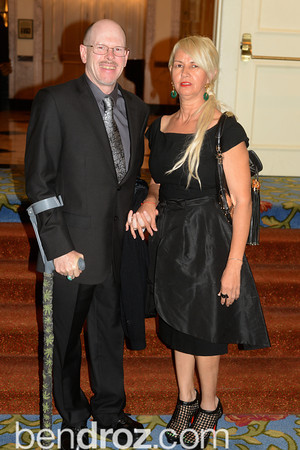
Bill Britt at the American’s for Safe Access award ceremony (Washington, DC October 16, 2012).
Congratulations Bill!
Oct 12, 2012 | MMJ News
By MALIA WOLLAN
at the NY Times
SAN FRANCISCO — The City of Oakland has filed a lawsuit in federal court to prevent the Department of Justice from seizing property leased to the largest medical marijuana dispensary in the country.
“This lawsuit is about protecting the rights of legitimate medical patients,” City Attorney Barbara Parker said in a statement on Wednesday, when the suit was filed. “I am deeply dismayed that the federal government would seek to deny these rights and deprive thousands of seriously ill Californians of access to safe, affordable and effective medicine.”
The civil lawsuit, which the City Council approved, seeks to “restrain and declare unlawful” the forfeiture proceedings against the landlords of the dispensary, Harborside Health Center, stating that Oakland will “suffer irreparable harm if the dispensaries are shuttered.”
“It is heartening to see the city stand up and support us,” said Steve DeAngelo, Harborside’s executive director. At its Oakland location, the nonprofit dispensary employs 100 people and serves some 112,000 more, seeing 600 to 800 customers a day. Last year, the group paid $3.5 million in taxes, including $1.1 million to the city.
(more…)
Oct 2, 2012 | MMJ News
By Alex Dobuzinskis
Reuters
LOS ANGELES (Reuters) – The Los Angeles City Council voted to rescind a newly enacted ban on storefront medical marijuana shops on Tuesday, allowing the city to avoid a referendum next year that some officials said would likely succeed in reversing the prohibition.
The council, in a blow to an industry that operates in violation of federal law, voted in July to ban pot dispensaries and replace them with a system that would allow up to three patients to collectively grow marijuana.
But medical marijuana advocates collected in August the necessary 27,425 valid signatures to put the decision to a March 2013 referendum. Under city rules, that number of signatures – 10 percent of the total number of votes cast in the city’s last mayoral election – put the ban on hold until the vote.
The backtracking comes a week after federal authorities moved to close about 70 such dispensaries in the city in a renewed effort to crack down on the operations through the use of asset-forfeiture lawsuits and warning letters.
(more…)
Oct 1, 2012 | MMJ News
By: Kenny Goldberg
at KPBS
Medical marijuana has been legal in California since 1996. But today in San Diego County, many patients are having trouble getting their hands on the drug.
That’s because all of the openly operating storefronts that sell marijuana have been shut down.
In response, activists in four local cities have placed measures to authorize medical marijuana dispensaries on the November ballot.
But even if the measures win, patients might ultimately lose.
Vey Linville has severe emphysema. He needs bottled oxygen to survive.
When Linville was first diagnosed, doctors told him without a double lung transplant, he’d soon be dead.
Linville got his affairs in order.
Then one day when he was searching on the Internet, he discovered a treatment for breathing problems that used to be widely prescribed in the 1800s, Tincture of cannabis. Linville found a recipe for it, and decided to make it himself.
“And I went out and joined one of the clubs, one of the dispensaries, and was able to buy a quarter pound of concentrates, that I put in a small amount of alcohol, and consumed over about 10 weeks,” Linville recalled. “And instead of dying as expected, here I am, six years later, doing better and better.”
(more…)